 Pasture Tally
Withdrawal-Date Math: The One Record That Keeps You Out of Trouble
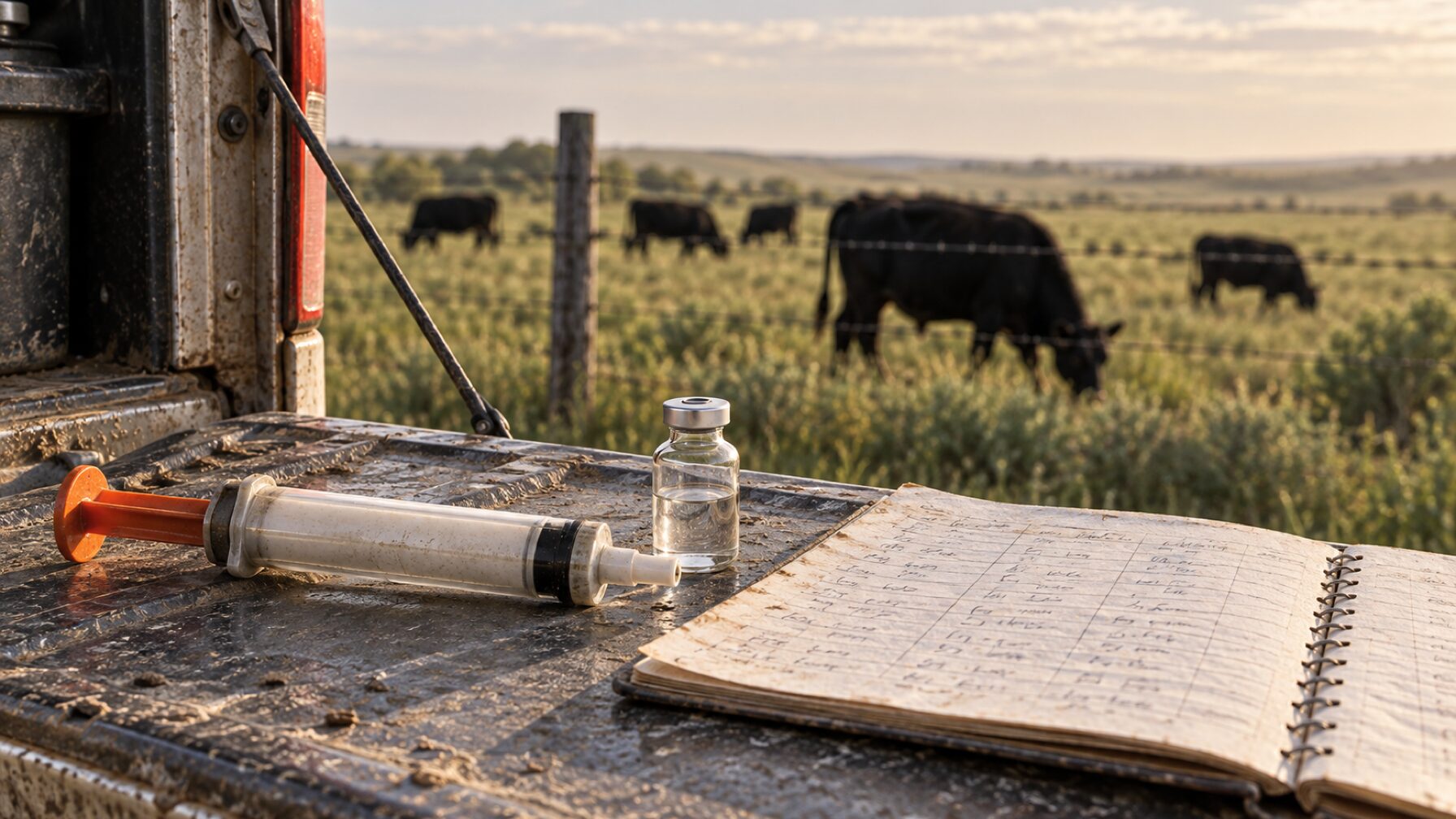
Ship day at the corral. Set of steers waiting to load. The truck’s backing up and the driver’s asking if they’re ready. Somebody at the fence says “did that black-baldy get his Draxxin last week?”
If you don’t know, with confidence, right now, standing at the alley, you’ve got a decision to make. Load the set and hope. Or pull the questionable one and hold him back another two weeks.
Wrong answer costs you real money.
The record that tells you which is which is the one most operations get sloppy with. Not because it’s hard. Because it’s boring, right up until it isn’t.
Here’s what actually works.
Why this record has sharper teeth than any other
Every drug you give a food animal comes with a withdrawal period. That’s the number of days you have to wait between treatment and slaughter (for meat) or milking (for lactating animals) before the animal is legally and biologically safe to sell.
Ship an animal inside its withdrawal window, and:
- The packer can refuse the load at the plant
- USDA inspectors can pull residue samples that flag your operation
- Carcasses can be condemned, and you pay for the disposal
- Your name goes on a residue violator list, and future loads face extra scrutiny
- If somebody eats meat that shouldn’t have shipped, liability sits with you
The upside of getting it right is quiet: nothing bad happens. The downside of getting it wrong is loud and expensive. That’s why the record for treatments matters more than any other single thing in your health book.
What every treatment record needs
Every time you stick an animal with something, five things need to end up in writing before you unclip the halter:
- The animal. Tag number, not “the black one on the north side.”
- The product. Draxxin, Excede, LA-200, whatever. Brand name plus generic if you know it. Batch or lot number if you have it (matters if there’s ever a recall).
- The dose and route. How many cc’s, sub-Q or IM.
- The date. The day you gave it, not “last week.”
- The withdrawal end date. The date this animal is clear to ship.
That last one is the whole point of writing it down. If you have to look up the label and do the math every time somebody asks “is this steer clear?”, you’ll skip the check some ship day, and that’s the day it bites you.
The math, in one line
Treatment date, plus the label’s withdrawal days, equals the day the animal is clear.
Draxxin says 18 days meat withhold. You gave it March 3. The steer is clear March 21.
That’s it. Every product has a number on the label. Add it to the day you gave it. Write the result down.
The two places this gets complicated:
- Extralabel use. If your vet prescribes a dose or route outside the label instructions, they’re required to give you an extended withdrawal number. Get it in writing on the prescription. Add that to your record instead of the label default.
- Multiple doses. If you gave a follow-up shot four days after the first, the clock resets from the second dose. Not the first.
Common products and their meat withdrawal windows
Rough reference (always check the current label; these can change):
- Draxxin (tulathromycin): 18 days
- Excede (ceftiofur): 13 days
- LA-200 (oxytetracycline): 28 days
- Nuflor (florfenicol): 38 days injectable, 44 days feed
- Penicillin G: 10 days meat, 96 hours milk (dose-dependent)
- Ivermectin injectable: 35 days meat, do not use in lactating dairy
- Banamine (flunixin): 4 days IV, longer IM (label discourages IM)
- Dexamethasone: no withdrawal officially, but AABP recommends 4-6 days
Milk-withhold periods, when they exist, are typically shorter than meat but stricter to time. Usually stated in hours, not days.
The “who’s clear to ship” workflow
The record is only useful if you can pull the answer in seconds, not flip through a month of notebook pages.
The workflow that works:
- Every treatment gets logged the same day, ideally at the chute
- Withdrawal end date gets computed at entry, not later
- Ship-day check is a single view: “show me animals with an active withdrawal window as of today’s date”
- If any of the animals in your ship pen appear on that list, you pull them
That last check is what saves you. Not remembering. Not hoping. A specific look-up on a specific day.
Why paper systems break down here specifically
Every part of this works fine in a notebook for a small operation. The failure mode is always the same: on ship day, you’re flipping pages back through months of treatments, doing withhold math for each one against today’s date, and hoping you didn’t miss a page.
Get busy. Rush the check. Skip a page. Ship an animal that shouldn’t have gone. That’s how the mistake usually happens, and it’s not the record system’s fault. It’s paper asking a human to do withdrawal math under time pressure.
The other failure mode is the notebook staying at the house when you’re standing at the corral. Or getting rained on. Or getting inherited from your granddad’s operation with three years of records in handwriting only he could read.
What actually works
A treatment record that computes the withdrawal end date the moment you enter the treatment, stores it against the animal, and lets you filter your herd on ship day by “clear to ship” versus “still in withdrawal.”
That’s what Pasture Tally does. Log a treatment, pick the product from a list, and the withdrawal clock starts itself. On ship day, filter your herd by clear-to-ship status and you get a yes/no per animal in a couple taps. Same record shows the vet on their next visit, prints out for a herd audit, and lives on the phone in your pocket instead of a page in a notebook at the house.
If you’re keeping treatment records on paper today, this is the single record I’d move to a digital system first. Every other one can wait. This one costs real money the day it fails.
Start a free trial if you want to try it. No credit card. If it doesn’t fit your operation, uninstall and go back to the notebook. But if you’ve ever caught yourself hesitating at the alley on ship day trying to remember when you gave a shot, that hesitation is telling you something.
For the fuller 5-things record-keeping guide, see Cow-Calf Record Keeping.

Justin Pierce runs a cattle operation in Tahlequah, Oklahoma. He built Pasture Tally to keep his own herd records straight in the pasture.